

Five years ago, learning a language meant textbooks and pre-recorded lessons. Today, smart dictionary apps have fundamentally changed what's possible — and accessible — to every language learner on earth. From contextual definitions to real-time conversation practice, here's what's changed and which tools are the best investment.
Smart Dictionaries That Understand Context
Traditional dictionaries give you definitions. A modern AI-powered dictionary understands that context matters. When language learners look up "run," the tool knows whether they mean the verb in a sports context, a computing context, or a political one.
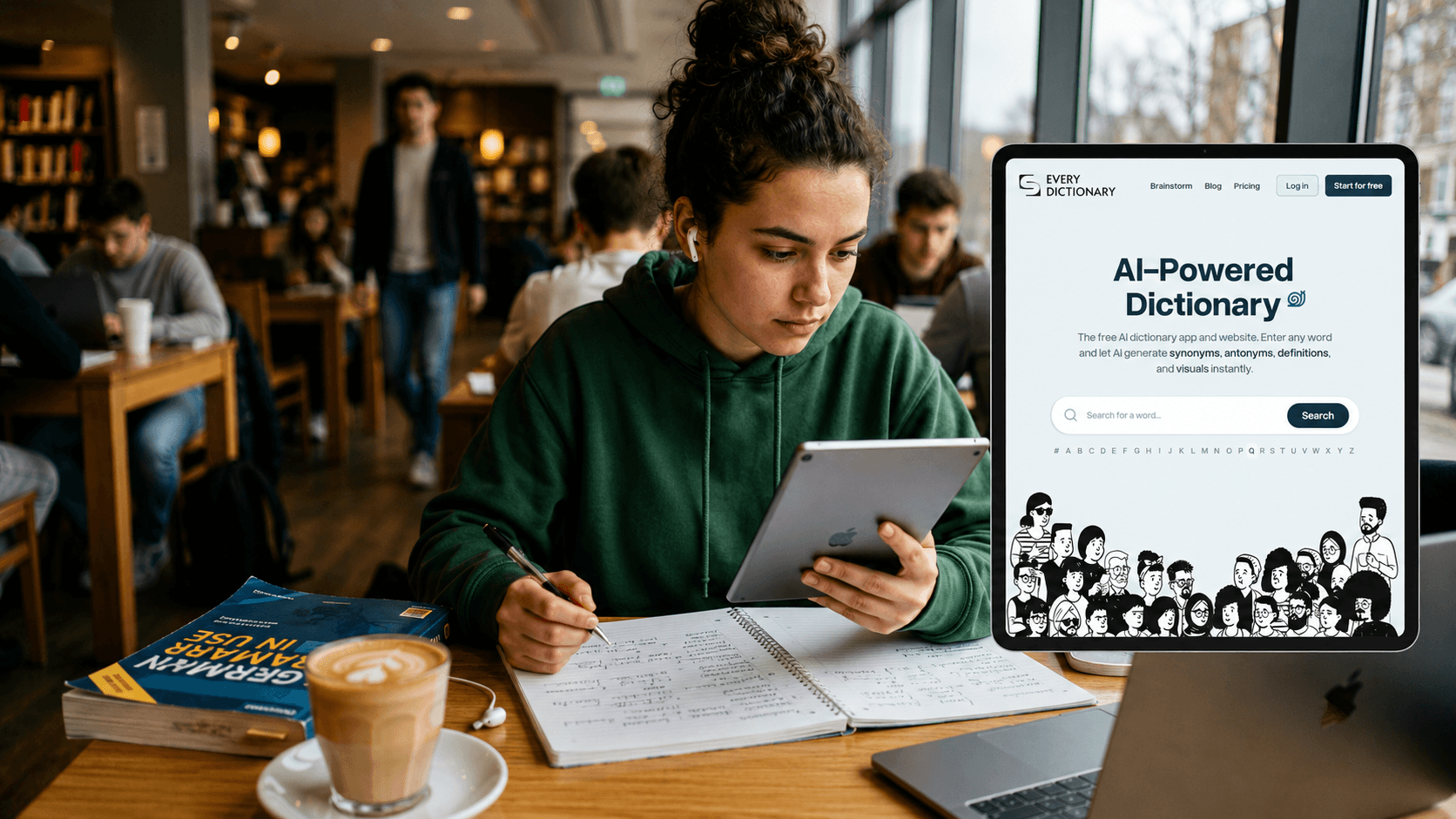
The best tools like Every Dictionary use large language models to surface the most relevant meaning for your query. Instead of one generic entry, you get all definitions from 20+ sources, plus synonyms, antonyms, and real-world examples — all in one place.
- Contextual definitions — AI picks the meaning that fits your intent
- Multi-source results — see every definition across dictionaries
- Visual examples — GIFs and video show meaning in action
AI Tutors and Conversation Partners
One of the biggest barriers for language learners has always been access to native speakers. AI conversation partners have changed this overnight. Learners can now have full conversations in their target language with instant feedback on grammar, vocabulary, and pronunciation — at any hour, for free or at minimal cost.
AI language tools have democratized learning. You no longer need an expensive private tutor or to live in a foreign country. Anyone with a smartphone can access AI-powered language help instantly.
Why Smart Dictionaries Beat Traditional Ones
A standard dictionary lookup gives you a definition and maybe an example sentence. A modern language app like Every Dictionary's brainstorm mode gives you everything at once:
- Definitions from 20+ dictionaries — not just one source
- Synonyms and antonyms with usage context
- GIF visuals and video examples of the word in use
- Verb conjugations across every tense
- Flashcards for long-term retention
This turns a passive lookup into an active learning session. Language learners don't just learn what a word means — they learn how to use it. Writers especially benefit from the synonym depth these tools provide — see how writers use AI dictionaries for better synonyms. For a deeper look at what these tools can do, read what is an AI dictionary tool: a complete guide.
Personalization at Scale for Language Learners
Perhaps the biggest shift is personalization. The best AI dictionary tools track which words you know, which concepts you struggle with, and what content interests you — then design a learning path tailored entirely to you.
Every Dictionary takes this further with features like search history, saved flashcards, and a personal word library. Combined with web access from any device, language learners can pick up exactly where they left off — whether on a laptop at home or a phone on the train.
What's Next for Language Learning Tools
The next frontier is multimodal AI — systems that combine text, speech, and visual context to create immersive language experiences. Imagine pointing your phone at a restaurant menu abroad and receiving not just a translation, but a cultural explanation and pronunciation guide.
- Multimodal search — combining text, image, and audio input
- Real-time context — AI that adapts to what you're reading or watching
- Cross-language connections — understanding words through your native language
Language learners who embrace these tools now will have a significant head start. A smart dictionary isn't replacing traditional learning — it's supercharging it.
See what an AI dictionary can really do — search any word on Every Dictionary.
Try it free →